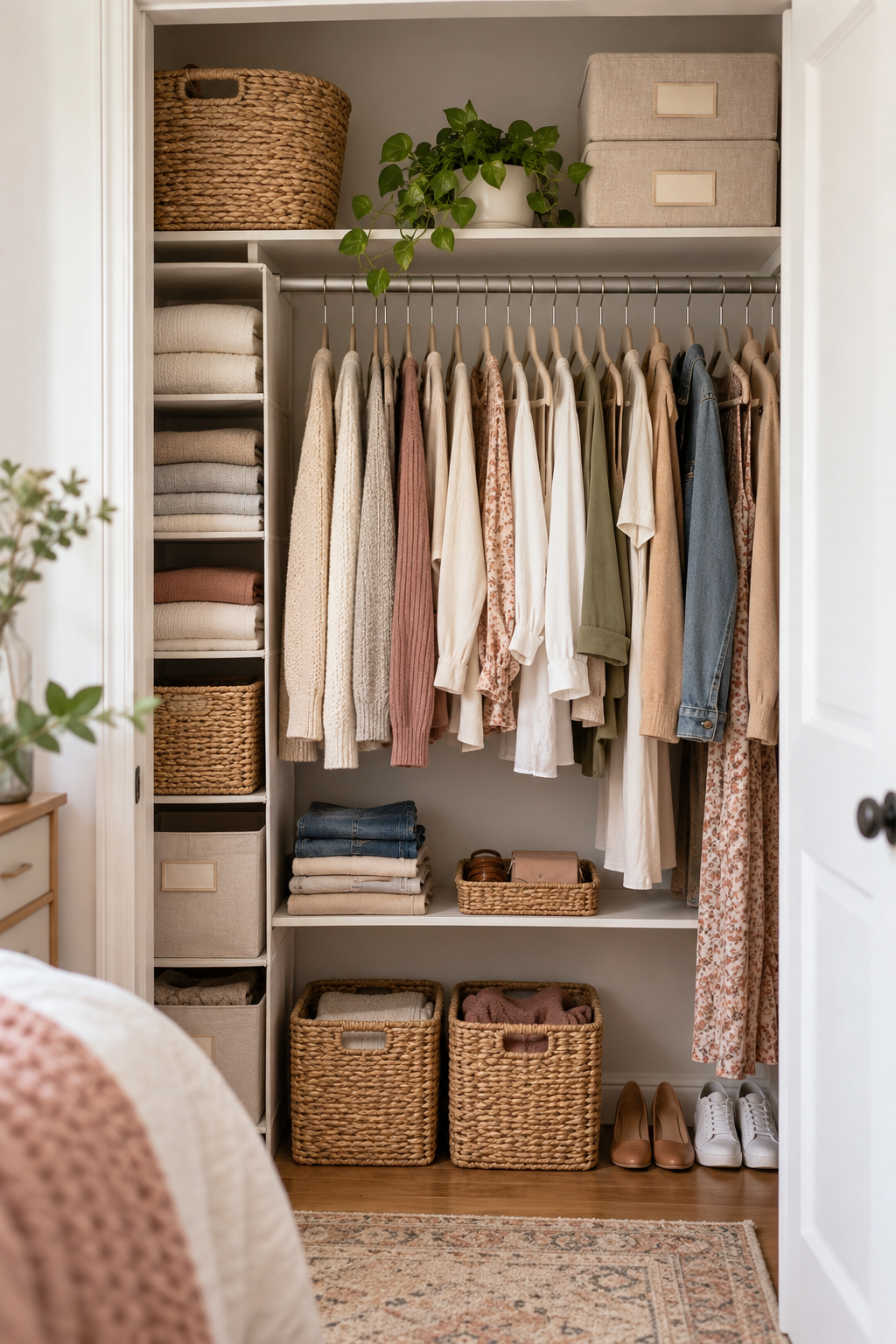
10 Small Closet Organization Ideas That Actually Work
A small closet does not need a complicated system. It needs a clear purpose, a little breathing room and storage that matches what you actually wear.
The goal is not to make every shelf look perfect. It is to make getting dressed easier, putting laundry away faster and keeping the floor from becoming a second dresser. These ten ideas work especially well in reach-in closets, apartment closets and shared bedrooms.
1. Empty the closet before buying organizers
Take everything out and group similar items together: everyday clothes, seasonal pieces, shoes, bags and things that belong somewhere else. This shows you what the closet truly needs.
Remove items that no longer fit your life before measuring the space. Otherwise, you may spend money organizing clothes you do not wear.
2. Give the easiest space to everyday clothes
The center of the hanging rail and the shelves between waist and eye level are your most convenient zones. Use them for the pieces you reach for every week.
Store formal, sentimental and off-season clothing higher up or toward the sides. A simple closet stays tidy longer when frequently used items are also the easiest to return.
3. Use slim matching hangers
Bulky hangers quietly take up a surprising amount of space. Slim hangers create a cleaner line, keep clothing at a consistent height and can free enough room for several additional pieces.
You do not need to replace every hanger at once. Start with one category, such as shirts, and build from there.
4. Add a second hanging rail when it makes sense
If most of your wardrobe consists of shirts, skirts and folded trousers, a second rail can almost double the useful hanging area.
Keep one section full height for dresses, coats and jumpsuits. Before installing anything, measure your longest short-hanging item and leave enough space beneath it.
5. Use the top shelf for contained storage
High shelves quickly become unstable piles. Baskets or soft-sided bins keep categories together and make the shelf easier to use.
Good top-shelf categories include:
- off-season accessories;
- special-occasion items;
- extra bedding;
- small travel bags;
- rarely used handbags.
Choose containers that you can lift safely. A large basket filled with heavy items is difficult to use and often ends up ignored.
6. Keep labels simple
Labels are helpful when a container hides its contents, but they do not need to be extremely specific. Broad labels such as “winter,” “travel” or “extras” are easier to maintain than a system with dozens of categories.
If you frequently change what a bin holds, use removable tags rather than permanent labels.
7. Make the closet floor intentional
The floor should have a defined job. It might hold a shoe rack, two baskets or a laundry hamper—but not all three if the space is too narrow.
Try to leave a small open area so you can see the floor. That visual boundary makes it easier to notice when unrelated items begin collecting there.
8. Use the back of the door carefully
An over-door organizer can hold scarves, belts, small bags or accessories. Hooks work well for tomorrow’s outfit, a robe or a frequently used tote.
Avoid turning the door into another crowded wall. Choose one purpose and leave enough clearance for the door to close without pressing against your clothes.
9. Fold to fit the shelf—not the other way around
Short shelf stacks are usually easier to maintain than tall ones. Use shelf dividers if sweaters or denim tend to slide into one another.
For deep shelves, place less-used items behind the everyday stack or use a pull-out basket so the back of the shelf does not become forgotten space.
10. Create a five-minute weekly reset
Once a week, return empty hangers to one spot, put away stray items and refold anything that has started to lean. This small reset prevents the closet from reaching the point where it needs another complete overhaul.
Attach the habit to something that already happens, such as putting away clean laundry or planning outfits for the week.
A simple small-closet setup
If you want a starting point, try this layout:
- Top shelf: two or three lightweight labeled baskets.
- Main rail: current-season everyday clothes.
- Side section: long hanging items.
- Lower shelf: folded denim or sweaters.
- Floor: shoes plus one contained basket.
- Door: a few hooks for frequently used accessories.
Use only the pieces that solve a real problem in your closet. Empty space is useful storage too.
Final thought
The best small-closet system is the one you can reset on an ordinary weekday. Start by removing what does not belong, improve one problem area and live with the change before adding more organizers.
Small, repeatable improvements usually work better than one perfect makeover.