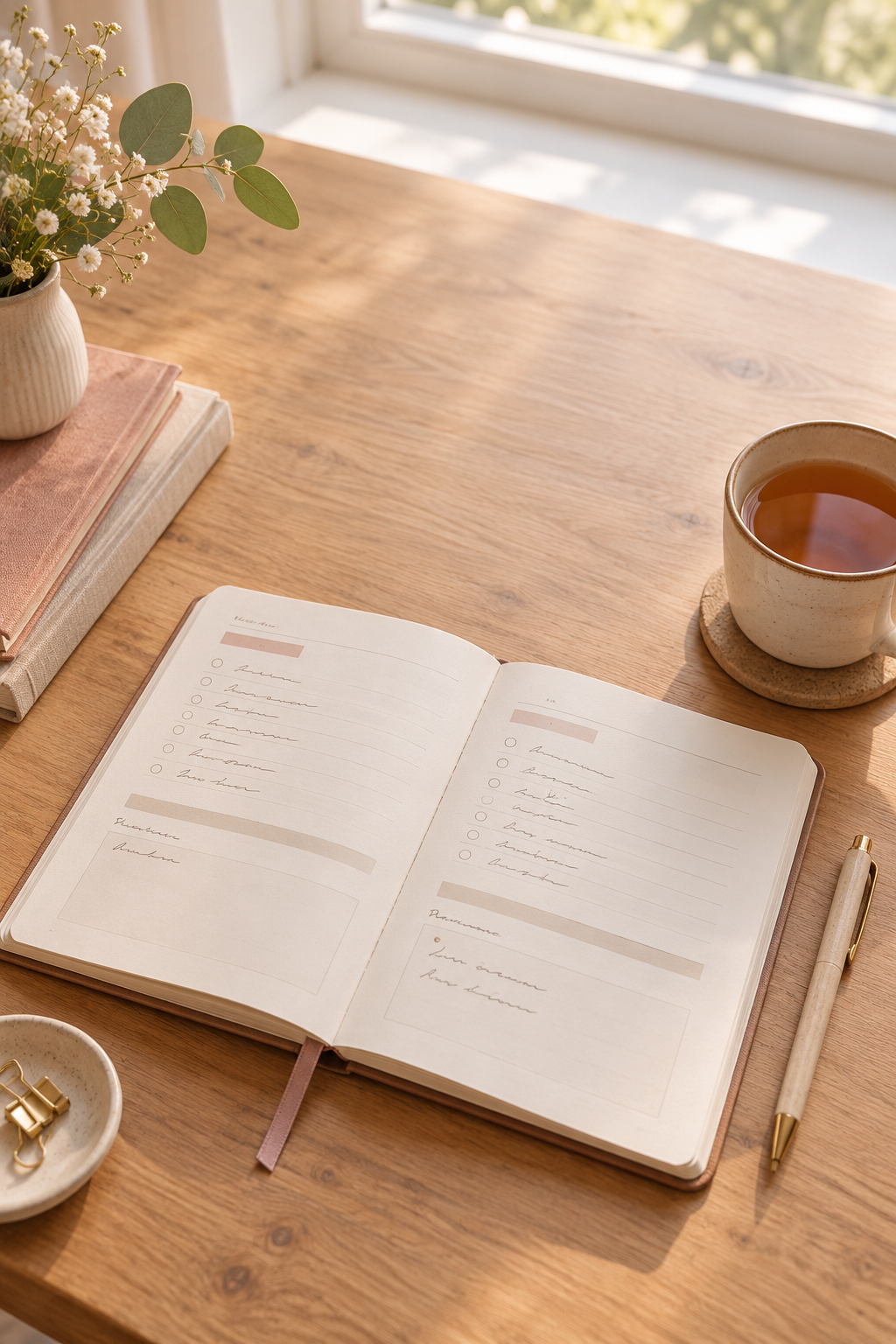
How I Plan My Day for Productivity and Peace
A useful daily plan should help you decide what matters before other people, notifications and unfinished tasks decide for you. It should also leave enough space for the day to change.
This method takes about ten minutes. It works on paper, in a notes app or inside a calendar. The tool matters less than keeping the plan short enough to trust.
Step 1: begin with what is already fixed
Write down appointments, work hours, school runs and other commitments that must happen at a particular time.
This creates an honest picture of the available day. A long task list may look reasonable until it is placed beside three appointments and an evening commitment.
Include travel and preparation time. A 30-minute appointment rarely uses only 30 minutes of the day.
Step 2: choose one main priority
Ask: “If only one meaningful thing moves forward today, what should it be?”
The answer might be finishing a work task, making an important call, preparing several meals or resting after a demanding week. Productivity is not limited to paid work.
Write this priority where you will see it. Give it a realistic block of time rather than hoping it fits between smaller tasks.
Step 3: add two supporting tasks
Choose up to two smaller tasks that would make the day feel complete. This creates a simple list of three:
- one main priority;
- one practical task;
- one small maintenance task.
Everything else can remain on a separate “later” list. It is not forgotten; it simply has not been promised to today.
Step 4: estimate time generously
If you think a task takes 30 minutes, consider giving it 45. Extra time accounts for setup, small interruptions and the transition to whatever comes next.
Avoid filling every open hour. A plan without margins becomes stressful as soon as one task runs long.
Step 5: match tasks to your energy
Put concentration-heavy work in the part of the day when you usually think most clearly. Save errands, email and routine decisions for lower-energy periods when possible.
You do not need a perfect morning routine. You only need to notice when certain work feels easier and use that pattern to your advantage.
Step 6: create a short reset block
Reserve ten to fifteen minutes for one small reset:
- clear the kitchen counter;
- put away a laundry load;
- prepare tomorrow’s bag;
- review the calendar;
- tidy the desk;
- write the next grocery list.
This is not an invitation to start a whole-house cleaning project. The reset should make tomorrow easier and still have a clear ending.
Step 7: decide when the day is finished
A plan needs a stopping point. Choose a time to close your work, review unfinished tasks and move them deliberately instead of carrying them mentally through the evening.
At the end of the day, ask:
- What did I complete?
- What needs to move?
- What can be removed entirely?
- What would make tomorrow gentler?
My simple daily planning template
Fixed commitments
Appointments and time-specific responsibilities.
Today’s three
- Main priority
- Supporting task
- Maintenance task
Small reset
One ten-minute action for home or tomorrow.
Not today
Tasks captured safely without adding them to today’s promise.
When the plan falls apart
Pause and make a new plan for the time that remains. Do not try to catch up with the version of the day that no longer exists.
Keep the next fixed commitment, choose one useful action and move the rest. Replanning is part of planning—not evidence that you failed.
Final thought
Planning works best when it reduces decisions rather than increasing pressure. A short, realistic plan gives your attention a direction while leaving room for ordinary life.
Start with one priority, two supporting tasks and a little empty space. That is often enough for a productive day that still feels like your own.